The Comrades Marathon is often described as a race against distance, terrain and self-doubt. In 2026, George Kusche turned it into a mathematics problem and produced a solution so devastatingly effective that it shattered an 18-year-old course record and rewrote the history books.
At the 99th edition of the Comrades Marathon, Kusche stormed from Durban to Pietermaritzburg in 5:15:56, dismantling Russian Leonid Shvetsov’s long-standing Up Run record of 5:24:49 by almost nine minutes. He also set the fastest average pace ever recorded in Comrades history.
His record-breaking performance earned him a payday of more than R2 million. The haul included R925,000 for the win, R242,000 as the first South African home, R605,000 for breaking the course record and a further R550,000 for recording the fastest average pace per kilometre.
The victory was not delivered by fireworks from the start. It was crafted with the patience of a chess grandmaster and the precision of a statistician.
Which, in many ways, is exactly what Kusche is.
While many elite athletes spend their days training, the 27-year-old balances world-class running with a full-time role as a Data Scientist at Pepkor Lifestyle. He holds a Master’s degree in Statistics, has passed eight Actuarial Society of South Africa examinations on his first attempt and approaches running with the same meticulous attention to detail that drives his professional career.
Born in the farming town of Malalane in Mpumalanga, educated at Laerskool Malelane and Affies in Pretoria, Kusche’s journey has taken him from South African school athletics to the NCAA system in the United States, where he competed for the University of Nebraska-Lincoln and Northern Arizona University.
A sub-four-minute miler with a 13:28 personal best over 5,000m, he returned to South Africa and joined Nedbank Running Club. After running 2:13 for the marathon, he skipped the traditional ultra apprenticeship and headed straight for Comrades.
His debut in 2025 produced a respectable 12th place. His second attempt produced a masterpiece.

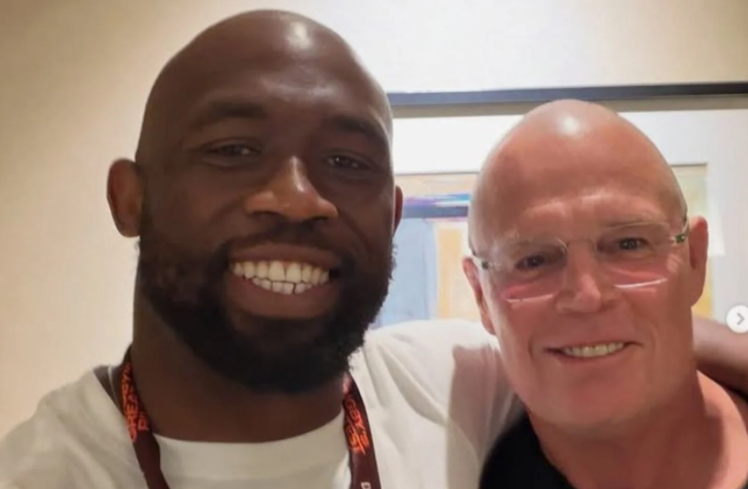
“I knew that 12th place was the absolute best I could have done on that day,” Kusche told nine-time Comrades champion Bruce Fordyce.
Yet the debut planted a seed.
“I know I made a lot of mistakes preparing for that Comrades because it was my first one. I was naive about what it takes to run Comrades.”
The project that followed was not called “Win Comrades”.
“It was Project 2026, but not to win. It was to focus on the process as much as I can and make sure that on June 14, 2026, I show up as the absolute best version that I could be.”
That philosophy became the backbone of an extraordinary campaign.
Unlike many modern elites, Kusche coaches himself.
He studies data. He tracks volume, intensity and elevation gain. He analyses heart rate trends. Every training variable is scrutinised like a research paper.
Yet even he admits there is artistry hidden beneath the spreadsheets.
“A taper is an art,” he said. “There’s no scientific study that can tell you exactly how much you should run in the two or three weeks leading up to Comrades.”
The numbers remain staggering.
His biggest training week reached 259 kilometres.
Fordyce and former Comrades champion Nick Bester famously worried he was overtrained.
Kusche smiled when the topic surfaced.
“I know about the overtraining allegations,” he laughed.
“You can’t look at one number and say someone’s overtraining. My workouts kept improving. In that 259-kilometre week, I felt like I could have done 300.”
His preparation for the Up Run centred around relentless hill conditioning in Pretoria.
Every Tuesday he repeatedly climbed and descended Platheus Hill, never chasing speed.
“I simply jogged up and jogged down and let the elevation gain do the damage it had to do.”
The result was gradual adaptation.
Without increasing effort, his pace improved while his heart rate dropped.
His long runs stretched from 50km to 70km before he discovered an important lesson.
“Seventy is too far for me. It breaks me down more than it builds me up.”
The scientist had found the sweet spot.
Race day revealed the final experiment.
How Rassie Erasmus inspired George Kusche’s historic Comrades breakthrough
Kusche spent the opening kilometres tucked inside the lead pack, conserving energy like a runner carrying precious fuel through a desert.
He followed Fordyce’s advice to remain cautious through Inchanga.
Then the gears began turning.
Around 45km to 55km, he started injecting surges into the race.
“I didn’t want the pack to be comfortable.”
Each acceleration was a calculated probe, a stress test designed to expose weaknesses.
Eventually, he stopped asking questions and started delivering answers.
“I decided it’s now time to go for gold.”
By 60km he was charging through the field. With 10km remaining, he swept past Mbuti Mollo and seized control.
Television viewers saw an athlete gliding towards history.
The reality was very different.
“My left calf was cramping. Every step was painful. I was afraid of being caught.”
Even after taking the lead, victory never felt secure.
When he crested Polly Shortts, one of the race’s defining landmarks, his thoughts remained fixed on survival.
“I wasn’t thinking about winning. I was thinking about putting one foot in front of the other and running as fast as I could.”
Then came a glance at the clock.
With two kilometres remaining, the display suggested something extraordinary.
“I realised if I ran ten minutes for the last two kilometres, I’d still run 5:18.”
The impossible was becoming inevitable.
Yet perhaps the most revealing answer came when Fordyce asked what it feels like to be Comrades champion.
Kusche paused.
“It’s a confirmation that the work we’ve been putting in has paid off.”
Not fame.
Not glory.
Not records.
Validation.
Behind the champion stands a support network led by his wife Lizerie, their baby boy and an employer he describes as “extremely supportive”.

The balancing act between corporate life and elite sport continues.
The possibility of becoming a full-time professional remains open.
“I do love running and the idea of doing it full time sounds very appealing, but I haven’t made up my mind.”
For now, the crown rests lightly on his head.
He already knows the next challenge awaits.
The 2027 Down Run looms like a giant lurking beyond the horizon.
Kusche is approaching it with the same humility that carried him to victory.
“You need to be afraid of Comrades. If you’re not afraid, you’re not going to perform at the highest level.”
In a sport often fuelled by bravado, that admission feels refreshingly honest.
The road to greatness is rarely straight.
For George Kusche, it has been measured in spreadsheets, hill repeats, threshold runs and thousands of lonely kilometres.
The Comrades Marathon finally handed him the answer.
And the answer was extraordinary.